Tuesday, July 31, 2007

Explained: Why Pluto Is Not A Planet

In August of 2006, the International Astronomical Union (IAU) made a textbook altering decision. The IAU is the main naming and definition-making organization in the astronomical community. After much debate and discussion, scientists at the IAU meeting collectively decided that Pluto's planetary title would be removed, and it would be labeled as a dwarf planet.

While some people applaud the IAU's decision, others refuse to accept it. The decision was made in 2006, and although people know Pluto is not a planet, most people fail to understand why Pluto is not a planet.

The common belief is that the IAU simply stripped Pluto's planet status. However, in reality, the IAU just issued a new set of requirements that would define if an object were a planet or not. Pluto failed to meet these new requirements. Pluto is not a planet because it does not meet all of the criteria that it takes for an object to be labeled as a planet.

The IAU stated that a celestial body must meet the following conditions to be called a planet:
  1. Orbits the Sun - The object should be orbiting the Sun. It cannot be orbiting another planet, or another object. It can only be a satellite of the Sun.
  2. Be a sphere - The object's 'self-gravity' should be strong enough that it smooths out any (major) bumps or ridges to become a mostly spherical body.
  3. Cleared its orbital neighborhood - There should not be any other bodies in the object's orbit. During the object's formation, it should have absorbed and cleaned out any debris in its orbit (with the exception of moons, because moons are gravitationally 'caught').
Pluto is not a planet because it fails to meet the third condition.
  • Compared to Pluto, Pluto's moon Charon, is pretty large because it is only about half Pluto's size. Both objects orbit a common center of gravity, but Pluto orbits this center of gravity at a much close distance than Charon, so that's why Charon is considered Pluto's moon.
  • For every three times Neptune orbits the Sun, Pluto orbits it only twice. This is called a 3:2 orbital resonance. In addition, there is a whole category of objects that do exactly this; they're called Plutinos. Pluto is also a Trans-Neptunian Object (TNO) and these objects orbit the Sun at a farther distance than Neptune does.
  • Pluto is also on the borderline of a region in our Solar System known as the Kuiper Belt where many icy bodies (both big and small) orbit the Sun at a very large distance.
Pluto falls into a whole range of objects that it can be included into. It can be considered a Trans-Neptunian Object, Kuiper Belt Object, and a Plutino. Basically, Pluto has not really cleared its orbit. There are too many objects that are similar to Pluto and are both larger and smaller than it is, that share common characteristics.
Therefore, instead of being a planet, Pluto is a dwarf planet. Dwarf planets orbit the Sun, are nearly round, have NOT cleared its orbital neighborhood, and does not orbit any other body (not a satellite).
-----
Image Credits: IAU, The IAU Votes; NASA, Pluto's newly discovered Moons; Wikimedia, the New Solar System.
Additional Resource: AstronomyCast: Pluto's Planetary Identity Crisis (Why Pluto isn't a planet)

Monday, July 30, 2007

Announcement

Astroversity originally started out as an astronomy site where you could get the latest in space/astronomy news. Although I will still provide important news, I won't be reporting all of the news. This in effect is going to steer this site so it is more helpful and interactive with the daily visitor.

Like I said news won't be the main objective of this site, but if you're looking for astronomy news, visit my favorite website Universe Today where Fraser Cain is always reporting the latest.

Sunday, July 29, 2007

Best of Hubble: Galaxies

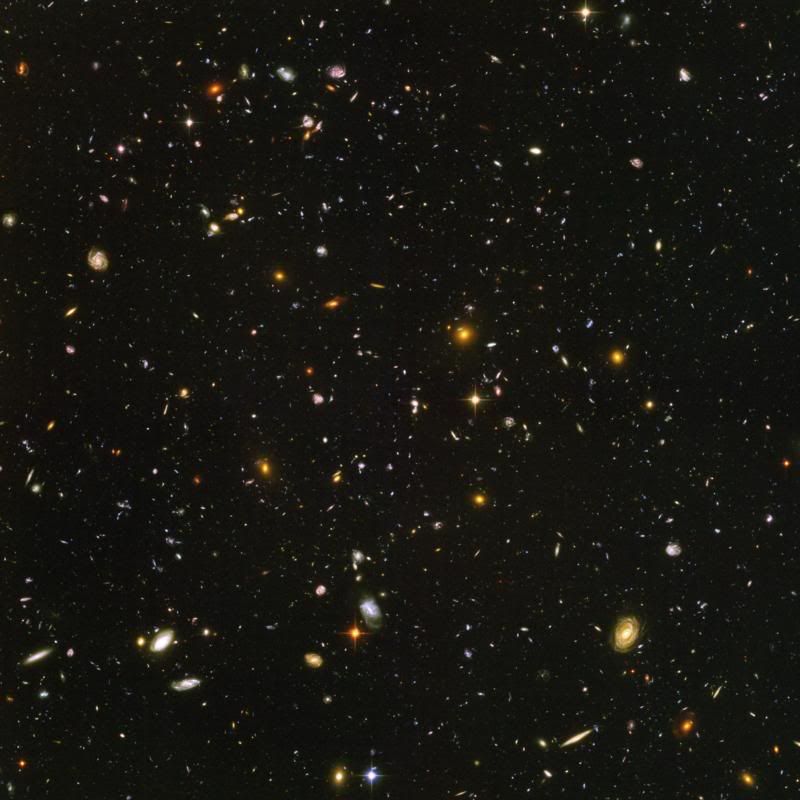
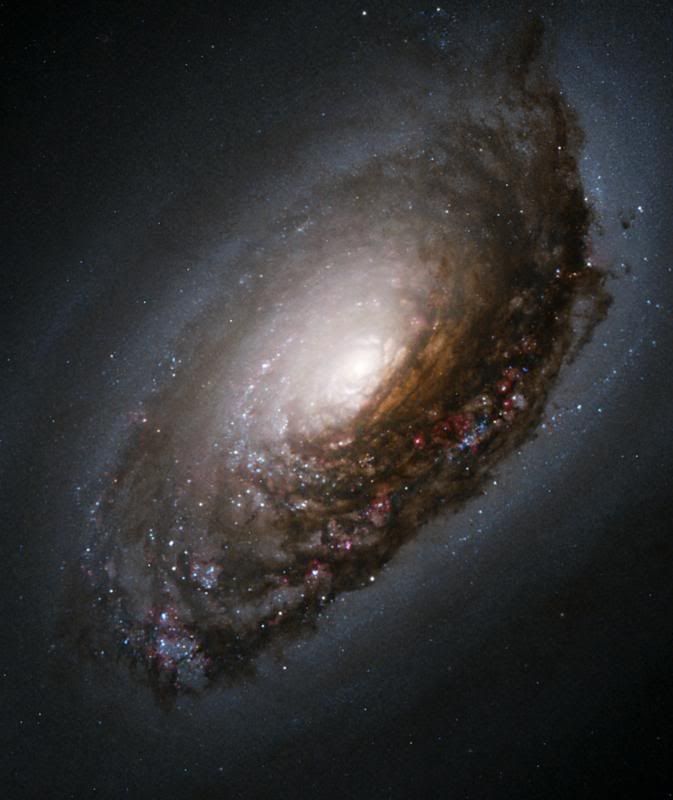
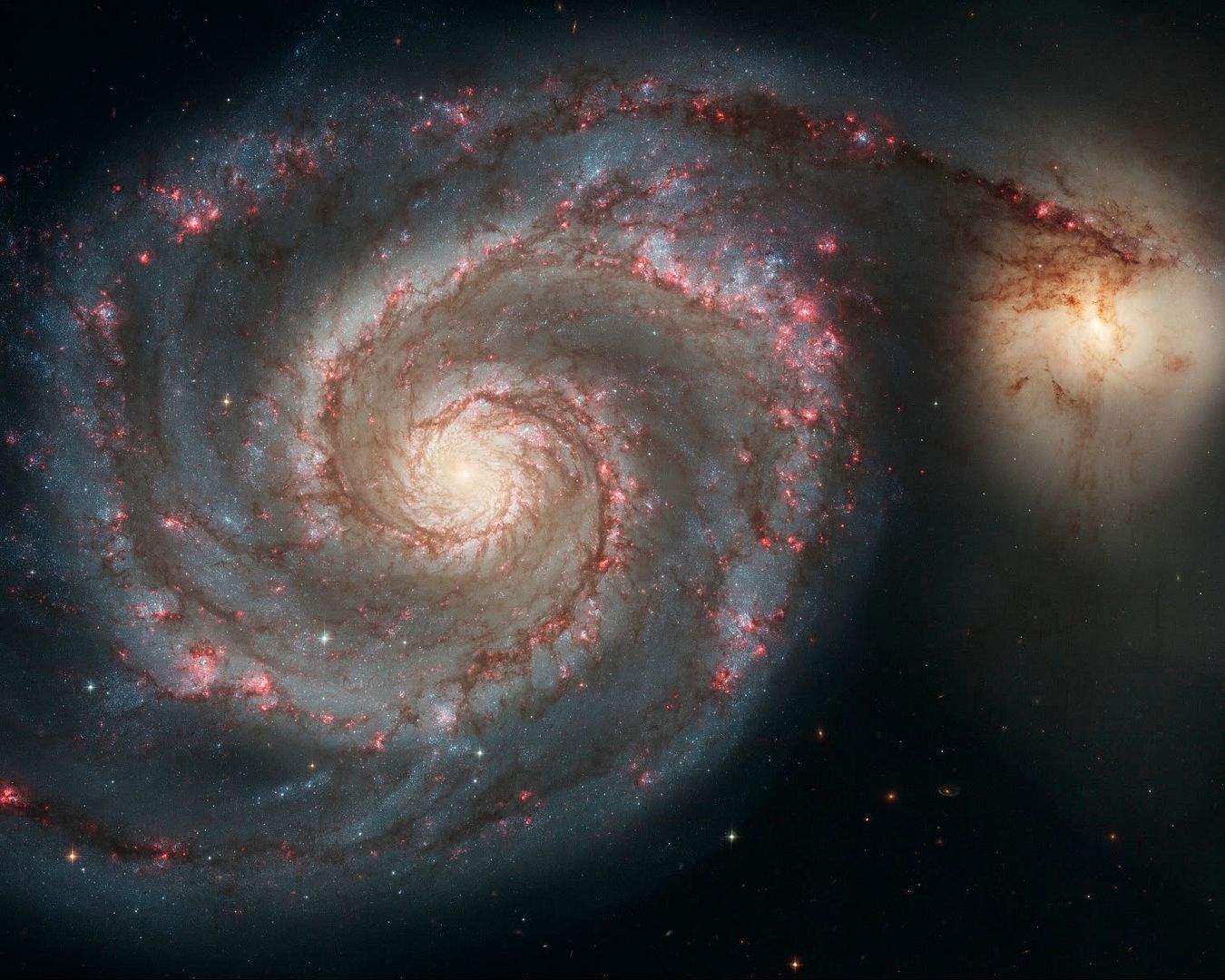
The first edition of the Best of Hubble Image series will be Galaxies. When viewing the images, like I always say, my layout does not reveal the true beauty of these images, so click on them to view a hi-res version of the image. To learn more about the selected images, click its corresponding name at the bottom. The subject of the next set of images will be pictures that feature nebula (start sending in your favorites). Many of you submitted your favorite galaxies and here they are:


Image Credits: Hubble. Images in order: M51, NGC 1300, NGC 4038-4039, Hubble Ultra Deep Field, Hoag's Object Galaxy, M64

Perseid Meteor Shower

The annual Perseid meteor shower will rain in the sights of sky watchers all on the Earth in two weeks on August 12. The best part of all is that there is a new moon on the 12th, meaning there will be no moonlight to obscure the view of the meteor shower.

The meteor shower is credited to the Comet Swift-Tuttle. Every year in August, the Earth moves through the debris left by the Comet's tail as it passes through our orbit. The small bits of the comet collide into the Earth's atmosphere at a whopping 132,000 mph so even the smallest objects light up in the sky.

Above: A Perseid fireball photographed August 12, 2006, by Pierre Martin of Arnprior, Ontario, Canada
The meteor shower starts at 9:00 to 10:00 on the 12th in the northeast(your local time) and you may see a a couple during an hour of sky watching. At the night unfolds, so will the amount of meteors. At around 2 AM of the 13th (still your local time) there may be dozens of meteors every hour. Bill Cooke of NASA's Meteoroid Environment Office estimates that at the shower's peak (before dawn), there will be one or two Perseids every minute.

Mars will also be observable. It will look like a bright red star in the northeast.

For optimal viewing of the meteors, it is best to be somewhere in the country or small suburbs where light pollution is not much of an interference.

Original Article: NASA

Friday, July 27, 2007

My Favorite Space Images

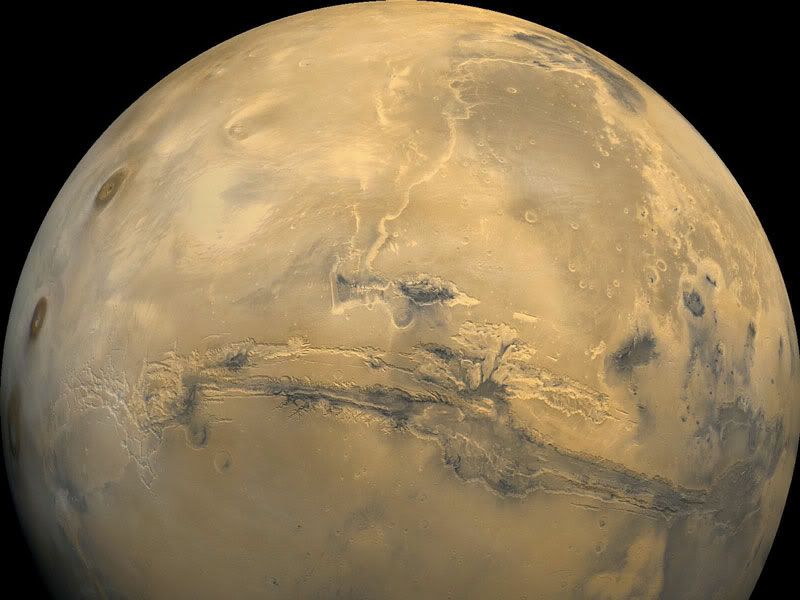
These are some of my favorite space images. Not all of the below pictures are taken by hubble. The compressed images below do not do these images the justice they deserve, so just click on them to view a higher resolution version of the picture. (The first three make good desktop backgrounds). Images: Mars, M51, NGC 6357, Saturn, Carina Nebula.

Click For Higher Resolution

Click For Higher Resolution

Click For Higher Resolution

Click For Higher Resolution

Click For Higher Resolution

Just a head's up, my first feature of Hubble images are going to be galaxies. So send in your suggestions and favorites of galaxy images that the Hubble has taken (email is located at the top right).

Carnival of Space 13

This week's Carnival of Space is being held at the LiftPort Blog. Give it a visit. Read about astronomy, and get to know a couple of new sites.

Thursday, July 26, 2007

The Best of Hubble Series

I'm going to start a series entitled, "Best of Hubble" in which I will feature the best of a certain type of Hubble image. So one theme might be "Best Nebula Images," or "Best Images From Our Solar System."

Pictured: The Hubble Space Telescope. Image Credit: NASA

I want to let everyone know that I cannot do this alone. I will be accepting suggestions for each theme. I will let you know in advance what kind of images I'm looking for, and then you can suggest them to me. My first of the Hubble Image Series will not be all Hubble images. They will just be a few of my all-around favorite space pictures. Be on the lookout for that, and I will be anxious for all of your help!

Mars Rover Dust Storm Update


Conditions at Opportunity, which was facing a very dangerous part of the storm, is starting to see conditions better very slightly. Meanwhile, Spirit, which was seeing a calmer side of the storm, is now beginning to see the storm's violent side.

Power consumption is a major problem, because if the dust storm blocks out too much light, the rovers will die trying to absorb sunlight. A new problem faced by both rovers is the freshly settled dust on both rovers which blocks a lot of sunlight from reaching the solar panels. NASA has commanded Opportunity to communicate with Earth once every three days, while Spirit is communicating daily. Activity on Opportunity and Spirit has been almost completely suspended.

NASA is still hoping the best for their fighting rovers, which are continuing to survive through conditions which they were never meant to operate in.

Pictured: Opportunity's view, as the horizon becomes more opaque every day. Image Credit: NASA
Original Article: NASA